PLANET is proud to announce the launch of the DCS-7342-48Y8C Version 2. While retaining the industry-leading high-density configuration of 48-port 25GbE SFP28 and 8-port 100GbE QSFP28 interfaces, DCS-7342-48Y8C Version 2 is built upon a radically updated hardware architecture designed to overcome the physical limitations of the first-generation platform.
This architectural evolution significantly expands system capacity and provides the flexibility required for future-scale network expansions. Beyond sheer performance, DCS-7342-48Y8C Version 2 introduces enhanced software functionality and platform readiness, ensuring that critical Layer 3 services—such as VXLAN/EVPN virtualization, BGP/IS-IS routing, and MLAG redundancy—operate with even greater efficiency and stability.
By upgrading to the DCS-7342-48Y8C Version 2, organizations can leverage these advanced hardware and software breakthroughs to build a more resilient, scalable, and ultra-high-speed Layer 3 switching infrastructure tailored for modern data centers and enterprise backbones.
Future-Ready Data Center Interconnects: Advanced L3 Routing & Virtualization
The DCS-7342-48Y8C Version 2 is a high-performance Layer 3 data center switch engineered for the most demanding high-speed, scalable environments. With a high-density configuration of 48 x 25GbE SFP28 and 8 x 100GbE QSFP28 ports, it serves as the ultimate foundation for spine-leaf, aggregation, and core data center deployments.
By leveraging an upgraded CPU and expanded system memory, the V2 platform unlocks significant breakthroughs in Layer 3 scale and network virtualization:
- Massive Routing Capacity: Optimized to support up to 216K IPv4 and 108K IPv6 routing entries, facilitating expansive topologies and intensive control-plane workloads.
- Advanced Dynamic Routing: Full-stack support for IPv4/IPv6 protocols, including OSPFv2/v3, BGP4/BGP4+, and IS-IS, ensuring seamless inter-subnet communication.
- Next-Gen Data Center Overlays: Enhanced VXLAN and EVPN capabilities enable highly flexible, multi-tenant virtualized overlay networks.
- Carrier-Grade Resilience: Features BFD for rapid fault detection, alongside ERPS (ITU-T G.8032) for sub-50ms ring recovery and VRRP redundancy.
- Intelligent Traffic Management: Maximizes bandwidth efficiency via ECMP (Equal-Cost Multi-Path), PBR (Policy-Based Routing), and robust PIM-SM/SSM multicast support.
- Robust Security Infrastructure: Enterprise-grade protection with TACACS+, 802.1X, and hardware-based Anti-ARP Scan to safeguard critical data.
- The DCS-7342-48Y8C Version 2 delivers high-scale routing with exceptional stability, providing a future-proof infrastructure for enterprise and cloud data center architectures.

Carrier-Grade Resilience for High-Scalability Network Environments
PLANET delivers a high-density, carrier-grade switching solution engineered to dominate the rigorous traffic demands of modern scalable networks. By integrating advanced Layer 3 software with next-generation hardware, this platform ensures seamless expansion and unwavering stability.
- Scalable Layer 3 Routing Infrastructure: Supports a comprehensive suite of routing protocols, including BGP, OSPF, and IS-IS, allowing for flexible and efficient path selection across complex, large-scale architectures.
- Next-Generation Virtualization: Hardware-accelerated VXLAN and EVPN capabilities enable the creation of scalable virtualized overlay networks, significantly improving workload mobility for cloud and multi-tenant environments.
- Advanced Traffic Engineering & QoS: Granular QoS Class-Maps and Policy-Maps ensure peak performance for mission-critical applications, while ECMP (Equal-Cost Multi-Path) optimizes bandwidth utilization and load balancing.
- Carrier-Grade High Availability: Features BFD (Bidirectional Forwarding Detection) for sub-second fault detection, paired with ERPS (ITU-T G.8032) and MRPP to guarantee maximum uptime and rapid self-healing.
- Robust Security & Access Control: A multi-layered security framework—including TACACS+, RADIUS, 802.1X, and hardware-based Anti-ARP Scan—safeguards management access and data integrity.

Resilient Network Infrastructure via Seamless MLAG Integration
To ensure non-stop network services and maximize bandwidth utilization, the DCS-7342-48Y8C Version 2 supports advanced MLAG (Multi-Chassis Link Aggregation). This technology delivers carrier-grade reliability and architectural flexibility for mission-critical infrastructures.
- Active-Active Redundancy: MLAG allows two switches to function as a single logical entity, enabling active-active link aggregation for seamless traffic failover.
- Simplified Domain Management: Administrators can easily configure and identify the MLAG cluster through the Domain ID setting, ensuring synchronized and stable control-plane operations.
- Loop-Free Architecture: By leveraging MLAG with LACP, the network eliminates the need for Spanning Tree Protocol (STP) on access links, resulting in higher bandwidth efficiency and near-instant convergence.
- High Availability for Spine-Leaf Fabrics: MLAG enhances resilience at the leaf layer, providing redundant paths to ensure that a single chassis failure never interrupts data flow.
- Seamless Scalability: The combination of MLAG and hardware-based load balancing allows for linear bandwidth scaling as your data center infrastructure grows.

Advanced Data Center Overlays: VXLAN & EVPN Integration
To master the complexity of modern cloud infrastructures, the DCS-7342-48Y8C Version 2 integrates hardware-accelerated VXLAN and EVPN to build scalable, high-performance virtualized overlay networks.
- Efficient Virtualization: VXLAN encapsulates L2 frames into L3 UDP packets, supporting up to 16 million isolated logical networks across a physical IP fabric.
- BGP-Driven Control Plane: Leveraging EVPN with BGP, the system intelligently distributes reachability info to minimize broadcast flooding and optimize traffic.
- Seamless Workload Mobility: Maintains L2 connectivity during VM or container migration across physical hosts, ensuring uninterrupted service delivery.
- Optimized Routing: Supports Integrated Routing and Bridging (IRB) and advanced multicast (PIM-SM/SSM) for efficient inter-segment traffic flow.
- Secure Multi-Tenancy: Features VFI (Virtual Forwarding Instance) to provide isolated, secure environments for multiple tenants over a shared infrastructure.
- Wire-Speed Hardware: The upgraded V2 architecture handles all encapsulation at wire-speed, delivering ultra-low latency for high-throughput applications.

Unified Fabric Management: High-Bandwidth Stacking for Seamless Scalability
To simplify the complexity of expanding infrastructures, the DCS-7342-48Y8C Version 2 supports advanced stacking, integrating multiple physical eight switches into a single high-performance logical chassis.
- Centralized Efficiency: Manage the entire stack through a single IP address, reducing administrative overhead and synchronizing configurations across the fabric.
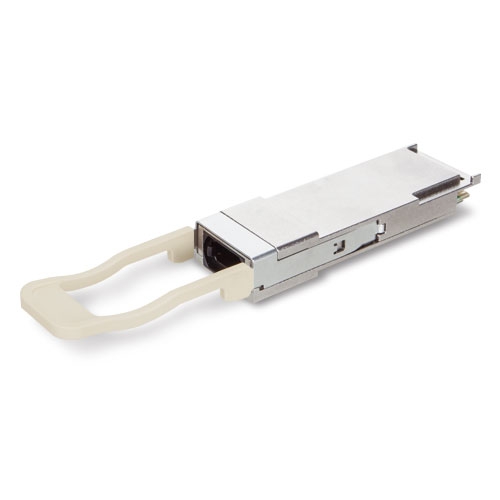
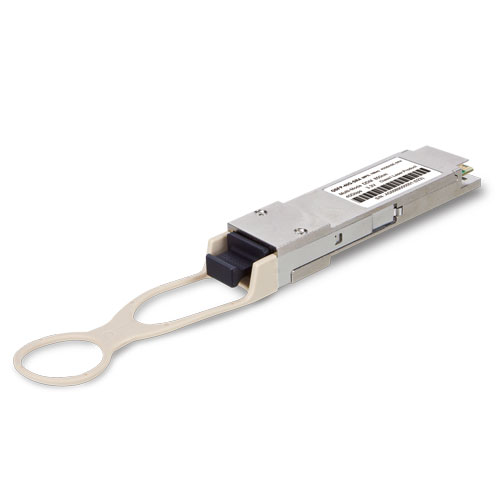
- 100G Stacking Backplane: Leverage high-speed 100G QSFP28 ports as stacking links to create a non-blocking internal fabric, ensuring massive throughput for inter-switch traffic.
- Distributed Resilience: Combined with Cross-Chassis LACP, the system provides seamless redundancy; traffic is instantaneously rerouted if a unit fails to maintain uninterrupted service.
- On-Demand Elasticity: A "pay-as-you-grow" architecture allows for seamless scaling of port density without reconfiguring the entire network topology.
- Secure Control Plane: Unified management access is hardened by TACACS+, RADIUS, and SSH, protecting the centralized stack against unauthorized access.
- Consistent QoS Performance: Hardware-based QoS profiles are applied across the entire stack, guaranteeing consistent priority for mission-critical applications.

Intelligent Management & Advanced Security Framework
The DCS-7342-48Y8C Version 2 combines sophisticated automation protocols with robust security architecture to simplify operations and protect critical data paths.
- Next-Gen Automation with NETCONF: Supports the NETCONF protocol to enable programmable network management and seamless integration with modern orchestration tools.
- Real-Time Traffic Analysis: Features sFlow technology for high-performance, hardware-based monitoring of network traffic, providing deep visibility into bandwidth usage and potential anomalies.
- Carrier-Grade AAA Security: Implements TACACS+, RADIUS, and SSH v2.0 to ensure encrypted management access and centralized authentication.
- Proactive Control-Plane Protection: Equipped with Anti-ARP Scan and hardware-based DDoS attack prevention to safeguard the switch CPU from malicious traffic.
- Precision Timing & Monitoring: Supports NTP for synchronized timekeeping and comprehensive RMON for proactive remote monitoring and diagnostics.
- Eco-Friendly Hardware Efficiency: Features intelligent fan temperature control that automatically adjusts speeds to reduce power consumption and noise.

Sustainable Infrastructure: Intelligent Power Management & Green Efficiency
As environmental responsibility becomes a core requirement for modern IT, the DCS-7342-48Y8C Version 2 integrates advanced power-saving technologies without compromising high-performance data center demands.
- Intelligent Fan Speed Control: Features a smart cooling architecture with redundant, hot-swappable fans. These fans dynamically adjust rotational speeds based on real-time temperature sensors, significantly reducing power consumption and acoustic noise during lower traffic periods.
- High-Efficiency Redundant Power Supplies: Equipped with 80 Plus Platinum (or high-efficiency) hot-swappable AC power modules. The redundant design not only ensures maximum uptime but also optimizes load sharing to achieve peak energy efficiency.
- Hardware-Level Power Scaling: The advanced V2 chipset architecture is designed to scale power consumption based on port link status. Unused ports are automatically placed in a low-power state, lowering the overall energy footprint of the rack.
- Optimized Thermal Design: The chassis airflow is engineered for professional front-to-back cooling, contributing to better overall Data Center PUE by aligning with hot/cold aisle containment strategies.
- Sustainable OPEX Reduction: By combining intelligent energy management with high-density performance, the DCS-7342-48Y8C Version 2 helps organizations reduce Total Cost of Ownership (TCO) and meet corporate carbon reduction goals.

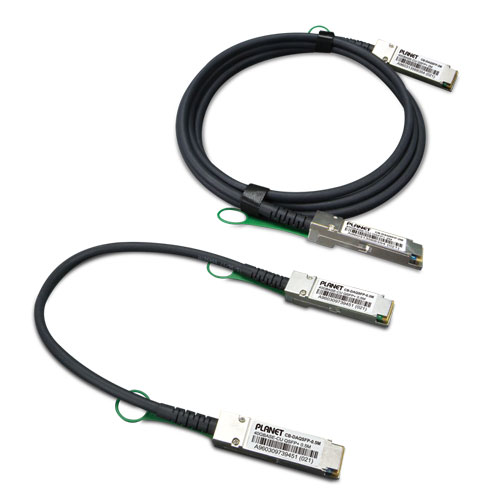
1-to-4 Port Expansion: 100G to 4 x 25G Breakout Solution
Maximize your hardware investment by transforming a single 100G QSFP28 port into four independent 25G SFP28 connections. This professional-grade breakout cable provides the most efficient way to link high-capacity core switches to multiple high-performance servers or storage nodes.
Core Advantages
- 1-to-4 Port Multiplying: Unlock 4 x 25Gbps lanes from a single 100G interface, significantly increasing available port count for downstream devices.
- Direct 100G Utilization: Fully utilize the massive 100Gbps bandwidth of your DCS-7342-48Y8C Version 2 without wasting unused capacity.
- Seamless Hardware Integration: Specifically engineered for 1-Port 100G/QSFP28 modules, ensuring perfect synchronization across all four 25G lanes.
- Carrier-Grade Efficiency: Eliminates the need for multiple expensive 25G transceivers and complex patch panels, reducing both failure points and costs.
- Low-Latency Fabric: Direct-attach architecture ensures near-zero signal delay, ideal for high-frequency trading and cloud computing.
- Spine-Leaf Optimization: Connect one 100G Spine port directly to four 25G Leaf switches or servers, creating a highly scalable and cost-effective network fabric.

Orchestrating Seamless VM Mobility and Multi-Tenant Isolation
In modern cloud data centers, the DCS-7342-48Y8C Version 2 serves as a high-velocity engine for virtualized workloads. By leveraging BGP-EVPN and VXLAN, the switch enables seamless Virtual Machine (VM) mobility across Layer 3 boundaries without the need for complex network reconfiguration.
Equipped with 48 x 25G SFP28 ports for high-density server access and 8 x 100G QSFP28 uplinks, the V2 platform provides the massive non-blocking bandwidth essential for East-West traffic (server-to-server). This architecture ensures strict multi-tenant isolation and service integrity, providing a robust, future-proof foundation for hyper-scale cloud operations and software-defined networking (SDN).

Resilient Enterprise Backbone for Mission-Critical Services
In large-scale enterprise data centers, the DCS-7342-48Y8C Version 2 provides a high-performance fabric to interconnect hundreds of servers and high-speed storage arrays. It is engineered to power mission-critical applications such as ERP, CRM, and high-frequency database services that demand zero latency and maximum stability.
By leveraging advanced VXLAN-EVPN routing, the switch enables granular network segmentation and multi-tenant isolation with hardware-level efficiency. With 8 x 100G QSFP28 uplinks and MLAG redundancy, the V2 platform ensures a non-blocking, high-availability architecture. This guarantees seamless operations and maximum up time for essential business workflows, eliminating single points of failure across the enterprise backbone.

Ultra-Low Latency Fabric for High-Frequency Trading (HFT)
In the competitive landscape of high-frequency trading, the DCS-7342-48Y8C Version 2 is engineered to deliver the microsecond-level latency and unwavering reliability required for split-second execution.
By supporting MLAG (Multi-Chassis Link Aggregation), the switch provides an active-active, unified fabric that ensures zero-packet-loss failover and maximum bandwidth utilization. The integration of BFD (Bidirectional Forwarding Detection) allows for sub-second, near-instantaneous path recovery, while advanced hardware-based QoS and security features protect the trading environment from network congestion and external threats.
This high-performance architecture, coupled with a sustainable, energy-efficient design, ensures secure, continuous, and lightning-fast trading operations for modern financial institutions.

Physical Ports
- 48-Port 25G SFP28 interfaces (Port-1 to Port-48)
- 8-Port 100G/40G QSFP28 interfaces (Port-49 to Port-56)
- RJ45 to DB9 console port for switch basic management and setup
- 1-port 10/100/1000T RJ45 Management Port
- 1 x USB 2.0 Type A for USB storage device (Configuration backup and restore)
Switching
- Features Store-and-Forward mode with wire-speed filtering and forwarding rates
- IEEE 802.3x flow control for full duplex operation and back pressure for half duplex operation
- 10K jumbo frame
- 128K MAC Address Table Size
- 24MB Shared Data Buffer
- Supports ESD Protection
- Contact Discharge 4KV DC
- Air Gap Discharge 8KV DC
- Automatic address learning and address aging
- Support CSMA/CD protocol
Stacking Features
- Connects with stack member via 25G SFP28 and 100G QSFP28 interfaces
- Single IP address management, supporting up to 8 units stacked together
- Virtualized multiple PLANET`s DCS-7342-48Y8C data center switch devices stacked into one logical device
IP Routing Features
- IPv4/IPv6 hardware static routing
- IPv4 dynamic routing protocols such as RIPv1/v2, OSPFv2, IS-IS and BGP
- IPv4 Route policy/IPv4 Policy-based routing
- IPv6 dynamic routing protocols such as RIPng, OSPFv3, IS-ISv6 and BGP4+
- IPv6 Route policy
- Ethernet Virtual Private Network (EVPN)
- Multiple tunneling techniquesGRE Tunnel, VXLAN, VRF and ECMP
- BFD session binding static routes, VRRP, OSPF, BGP and RIP
Multicast Routing Features
- IPv4 IGMP v1/v2/v3
- Support PIM-SM (Protocol Independent Multicast–Sparse Mode) and PIM-SSM ((Protocol Independent Multicast
- Source-Specific Multicast), PIM-DM (Protocol Independent Multicast – Dense Mode)
- IPv6 MLD v1/v2 and MLD v1/v2 Snooping
- Support Multicast VLAN Registration for IPv6
- Support PIM-SM v6 (Protocol Independent Multicast-Sparse Mode IPv6)
Layer 2 Features
- Support VLAN
- Support up to 4K VLANs
- IEEE 802.1Q tagged VLAN
- Provider Bridging (VLAN Q-in-Q) support (IEEE 802.1ad)
- Protocol VLAN
- MAC Based VLAN
- Protocol Based VLAN
- Private VLAN (Protected port)
- Voice VLAN
- Super VLAN
- Guest VLAN
- GVRP
- Support VXLAN Layer 2 Switching, Routing Switching, and Layer 3 GRE Tunnel
- Support BGP EVPN
- Support Priority Flow Control (PFC)
- Support Link Aggregation
- IEEE 802.3ad Link Aggregation Control Protocol (LACP)
- Cisco ether-channel (static trunk)
- Multi-Chassis Link Aggregation (MLAG)
- Basic configuration
- Blackhole flow protection
- MLAG VRRP
- MLAG dual active
- Support 802.1D STP, 802.1w RSTP and 802.1s MSTP
- BPDU Protection
- Root Protection
- Loop Protection
- Anti TC-BPDU Attack
- Support L2-L4 packet filtering
- Filters based on MAC, IP, port, protocol, IP ToS, 802.1p priority, VLAN ID, SVLAN ID, VLAN range, etc.
- Support Multi-layer ring protection protocol (MRRP)
- Support Device Link Detection Protocol
- Support Bridge Protocol Filter
- Support Uplink Line Protection Protocol
- Loop detection to avoid broadcast loops
- Support port mirroring, flow mirroring, remote mirror, multi-destination, CPU mirror source/destination and ERSPAN
- Link Layer Discovery Protocol (LLDP)
- Compatible with Cisco uni-directional link detection(UDLD) that monitors a link between two switches and blocks the ports on both ends of the link if the link fails at any point between the two devices
- Support ITU-T G.8032 ERPS (Ethernet Ring Protection Switching)
Ethernet OAM
- Support IEEE 802.3ah EFM
- Support IEEE 802.1ag CFM
- Support ITU-T Y.1731OAM functions and mechanisms for Ethernet based network
Quality of Service
- Ingress shaper and egress rate limit per port bandwidth control
- 8 priority queues on all switch ports
- Traffic classification
- IEEE 802.1p CoS
- ToS/DSCP/IP Precedence of IPv4/IPv6 packets
- IP TCP/UDP port number
- Typical network application
- Strict priority and Weighted Round Robin (WRR) CoS policies
- Traffic-policing on the switch port
- DSCP remark
Multi-Protocol Label Switching
- Virtual Private Network
- Layer 2 Virtual Private Network
- Layer 3 Virtual Private Network
- VPLS
- VPWS
- Layered Service Provider Static
- MPLS TE
- RSVP
- MPLS QoS
- LDP (Label Distribution Protocol)
Multicast
- Support IPv4 IGMP snooping v1, v2 and v3
- Support IPv6 MLD snooping v1 and v2
- MVR (Multicast VLAN Registration)
Security
- Authentication
- IEEE 802.1X port-based network access authentication
- Built-in RADIUS client to cooperate with the RADIUS servers
- AAA Authentication
- RADIUS/TACACS+ login user access authentication
- Access Control List
- IP-based ACL/MAC-based ACL
- ACL based on:
- MAC Address
- IP Address
- Ethertype
- Protocol Type
- VLAN ID
- DSCP
- 802.1p Priority-Up to 512 entries
- ARP
- ARP Detection
- ARP Anti Attack
- Anti ARP Scan
- ARP Guard
- ARP Binding
- ARP Limit
- ARP Inspection
- MAC Security
- Static MAC
- MAC Filtering
- Blackhole MAC List
- Loging Filter
- Telnet/SSH ACL filtering
- Telnet/SSH IPv6 ACL filtering
- Port security for source MAC address entries filtering
- VLAN security for MAC address learning on VLAN
- DHCP snooping to filter distrusted DHCP messages
- IP source guard prevents IP spoofing attacks
- DoS attack prevention
- RBAC (Role Based Access Control)
- Link-Flapping detection
Management
- Support Console, Telnet and SSH v1.5/v2 terminal services
- Support SNMPv1/v2/v3 network management protocols and standard MIB for general features
- SNMP trap for system notification
- Support RMON (Remote Monitoring)
- Support NETCONF network management protocol
- System maintenance
- Firmware upload via TFTP
- Configuration upload/download through FTP/TFTP
- Hardware reset button for system reboot or reset to factory default
- Support fan temperature control for automatic adjustment
- Support temperature and fan monitoring with alerts
- SNTP Network Time Protocol (Simple Network Time Protocol) and Network Time Protocol (NTP)
- Support sFlow v4/v5
- DNS Client Status
- Support IPv4 ARP/ARP Proxy
- Support IPv6 ICMPv6/ Path MTU Discovery(PMTUD)/PPPoE+/ Neighbor Discovery Protocol (NDP)
- Log and alarm
- CPU usage display and alarm
- Memory usage display and alarm
- Temperature, PSU, FAN, status display and alarm
- Operation logs
- Management of logs, alarms, and debugging information
- Network Diagnostic
- ICMPv6/ICMPv4 remote ping
- Trance Route
- DDM (Digital Diagnostic Monitor)
- DHCP Functions
- DHCP Client/Relay/Server
- DHCP Snooping
- DHCP Option 82/252
- DHCPv6 Client/Relay/Server
- DHCPv6 Snooping
Redundant Power System
- Support dual power redundancy and redundant backup for two sets of fans (Include 2 power DCS-PWR550 ACHDC)
- Hot-swappable power modules and fans
Hardware
- 19-inch rack mountable; 1U height
- Reset button for resetting to default setting and system reboot
- LED indicators for power alert, fan alert and Ethernet interfaces
- FCC Part 15 Class A, CE
Datasheet
Quick Guide
User's Manual